
In Context
One in eight women will be diagnosed with breast cancer during their lifetime. Early detection significantly improves patient outcomes, making breast cancer the most treatable cancer. Yet, it remains the leading cause of cancer-related deaths among women.
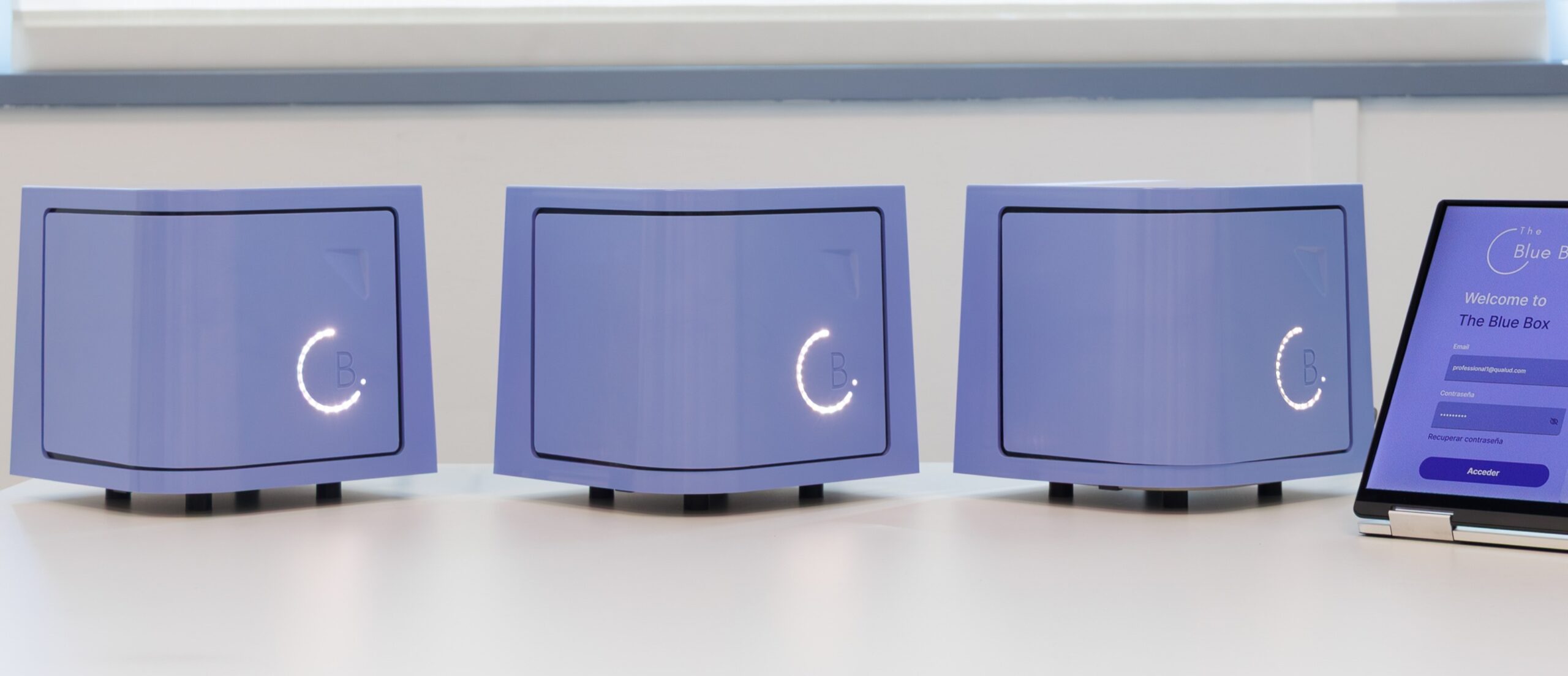
The Blue Box Biomedical Solutions is changing this. The company has developed an In Vitro Diagnostic (IVD) device that detects breast cancer biomarkers in a urine sample, non-invasive, painless, and with a projected Negative Predictive Value of 99.7%, compared to 95.6% for mammography. The device aims to initially complement mammogram screening when an inconclusive result is obtained, reducing unnecessary biopsies. Long-term, however, it has the potential to redefine the standard of care for breast cancer screening entirely.
The Challenge
- The electronics were built on basic, non-scalable hardware that could not be reproduced consistently or manufactured at scale.
- Heat management of the urine sample — a core function of the device — was poorly controlled, introducing variability that undermined result accuracy and consistency.
- The device picked up ambient electrical noise it was not supposed to detect, compromising measurement reliability.
- It was not designed to perform more than a single test, making it incompatible with the repeated, consistent data output required for clinical use.
- It lacked the safety compliance and software governance required under medical device regulations.

Perdigó's Approach
Perdigó took on the complete engineering development of The Blue Box device, redesigning it from the ground up while preserving and enhancing the core diagnostic technology.
A clean, user-centred industrial design
Perdigó redesigned the physical architecture and industrial design of The Blue Box to be clean, intuitive and professional, housing advanced internal technology within a form factor appropriate for a hospital or laboratory environment.
Precision sample heating through physics simulation
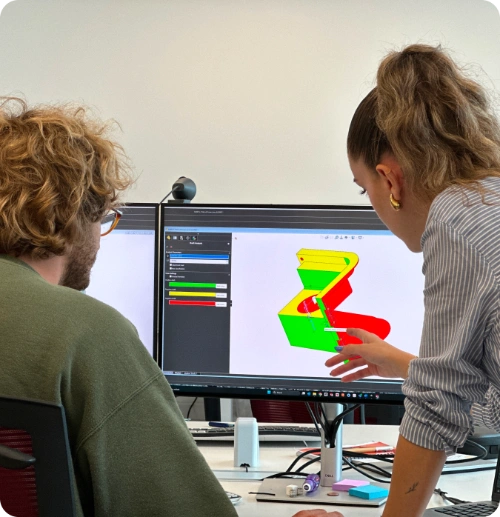
Accurate detection depends on the urine sample being heated to a precise, stable temperature. We performed both numerical and analytical simulations of the dynamic heating process, modelling thermal behaviour across different conditions.
Regulatory-compliant firmware under SiMD standards
Our team developed the firmware in full compliance with ISO 62304 and ISO 81001, a prerequisite for CE marking and clinical use. Doing it correctly from the outset avoids costly rework later.
EMC and safety compliant electronic hardware
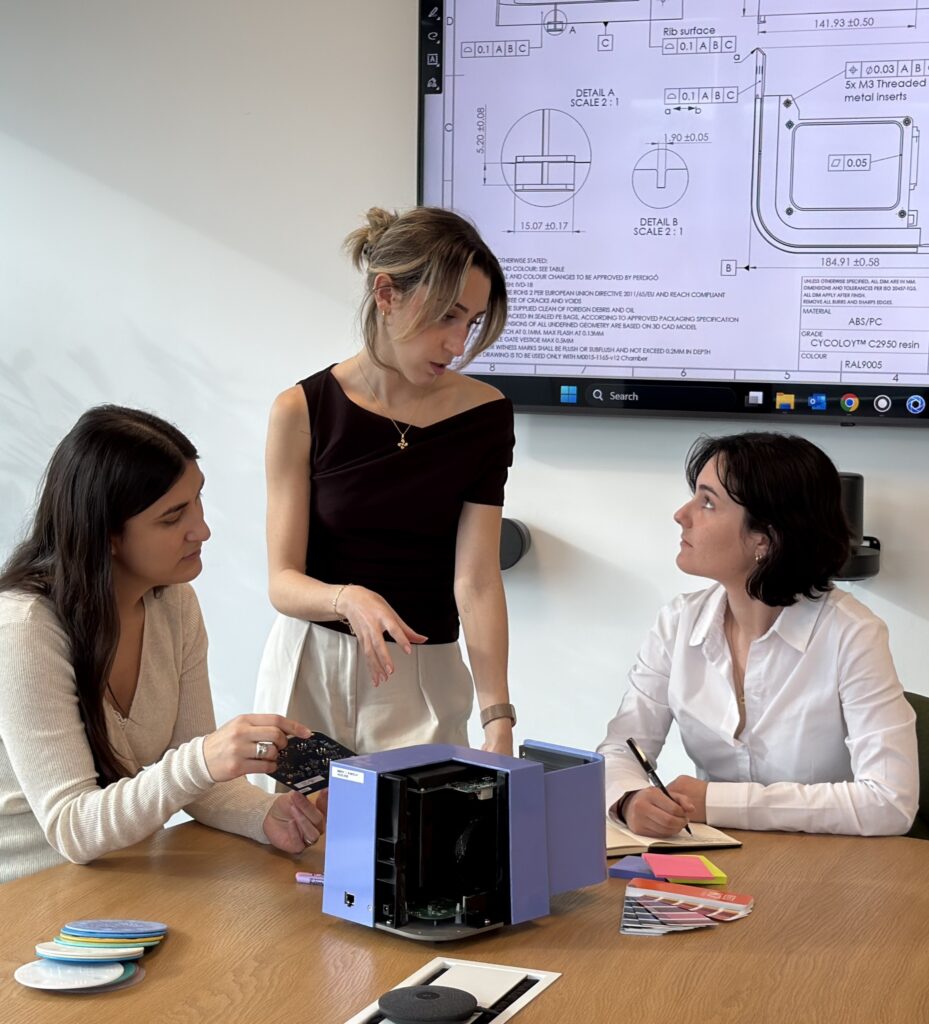
Perdigó developed custom EMC-compliant electronic hardware that is robust against electromagnetic interference and does not itself emit disturbances that could affect other laboratory equipment.
The electronics team replaced the original Bluetooth-dependent architecture with wired Ethernet, building end-to-end secure cloud connectivity that meets the reliability and security standards demanded by hospital network environments.
Manufacturing transfer with first-iteration success
Delivered Value
Perdigó transformed a handcrafted proof-of-concept into a fully engineered, regulatory-ready, scalable IVD device built for CE marking. The Blue Box now has:
- Consistent, reliable diagnostic output, resolving the thermal, electronic, and repeatability limitations of the original prototype
- Regulatory-compliant firmware and Technical Documentation aligned with IVDR, IEC 62304, ISO 81001-5-1, and IEC 61010-1
- A secure, hospital-grade connectivity architecture
- A manufacturing-ready design
- A clinical verification batch in active use, with a clinical trial imminent
